Composting garden waste has become an essential practice in waste management, and France is taking bold steps to strengthen this initiative. Starting in January 2024, the biowaste law will come into effect, requiring citizens to compost their garden waste. In this article, we'll look at the reasons behind this decision and I'll give you some practical tips for adapting to these changes.
What is biowaste?
Biodegradable waste is essentially anything that comes from nature and can return to nature without leaving a trace. In other words, it's organic waste that decomposes naturally thanks to earthworms, bacteria, and fungi.
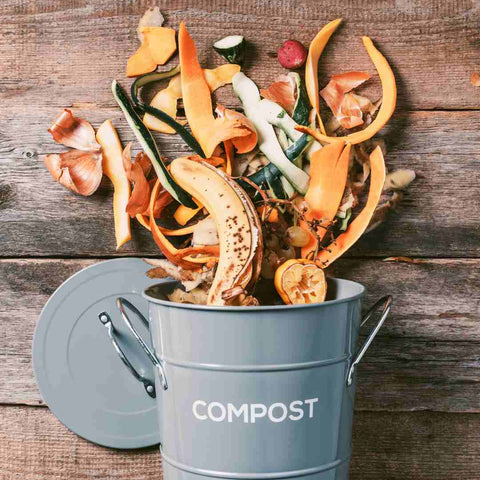
Imagine your leftover fruits and vegetables, peelings, coffee grounds, eggshells, and even the fallen leaves that litter your garden in autumn. All of that is organic waste! Pretty cool, right? It then becomes a kind of superfood for the soil, a way to do natural recycling.
Why is composting essential?
Environmental benefits of compost
Composting offers significant environmental benefits.
In nature, when organic matter comes into contact with the soil, a natural decomposition process occurs. The speed of this process depends on several factors, including the presence of microorganisms, heat, moisture, and oxygen. The result is a rich humus mixture that nourishes the soil.
Reduction of organic waste
It is estimated that organic matter makes up about 47% of our garbage. Imagine the ecological disaster caused by the thousands of tons of biowaste we bury in the same places every year!
If we bury these bio-wastes, the lack of oxygen completely changes the decomposition process, producing a large quantity of biogas, including methane, a greenhouse gas (GHG) 20 times more polluting than the CO2 emitted by our cars.
On the other hand, the water contained in buried food becomes loaded with heavy metals and other acids upon contact with waste, and risks causing contamination of groundwater.
The Bio-waste Law in 2024
From January 1, 2024, France is taking proactive steps to combat environmental challenges by mandating the composting of plant waste. This law aims to encourage citizens to adopt more sustainable practices, similar to the selective sorting of paper, glass, and plastic.
How to choose the right composter?
Whatever the layout of my home, there's a suitable way to compost, and I've tested several…
Composting when you have a garden
At home, you can opt for an individual composter in your garden, in contact with the soil, and let nature do its work. You can easily make one with a few pallets or other recycled materials. It's very practical, especially for larger households, and quite simple to use.
Composting in an apartment
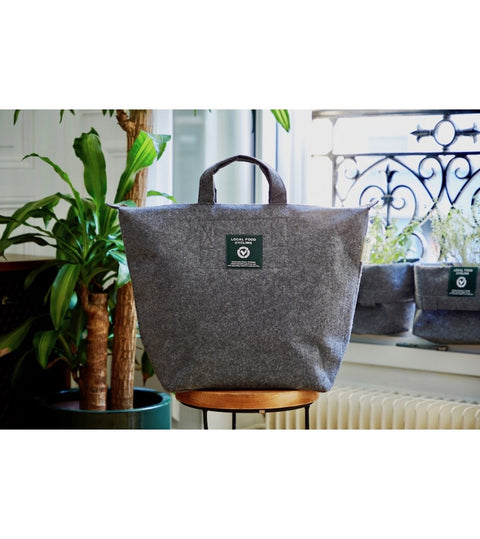
If I don't have outdoor space, I can get an odorless apartment composter. It's perfectly designed for the kitchen, with no odors or risk of attracting insects, and it will allow you to easily compost up to 400g of food waste per day, in order to obtain a natural fertilizer for your plants and vegetable garden in 2 or 3 months, thanks to the simple action of its substrate made from bio-charcoal and coconut fiber.
Personally, I've been using this bag for over 2 years, it's the simplest solution I've tested, however, it's more suitable for a single person or a couple who don't cook much.
Composting on a balcony
On a balcony, a small worm composter is the best option. It's a container with earthworms that feed on food scraps and transform them into compost and natural fertilizer, ideal for creating a small green space. It's a practical and efficient way to get fertilizer quickly; however, it can be a little tricky to set up.
Community composter
I can request that the building management install a communal compost bin in my building. Alternatively, I can find a community garden or other collection point near me where I can take my food scraps. It's convenient if it's nearby and easily accessible for regular waste collection.
What can I put in the composter?
Types of compostable waste
You can compost all nitrogen-rich materials such as fruit and vegetable scraps, coffee grounds, and carbon-rich materials such as cardboard, eggshells, and dead leaves. However, be aware that nutshells take a very long time to decompose, as do the thick peels of citrus fruits, so it is advisable to cut them into small pieces.
Things that cannot be composted
Certain elements can compromise the quality of the compost, for example, cigarette butts or cat litter should not be put in the compost.
It is also best to avoid meat, cheese and fish scraps so as not to attract rats.
Some municipalities offer composting solutions to encourage their residents to compost. Check with your local town hall for more information.
I hope this article has helped you better understand biowaste, and why composting is important.
Christmas is just around the corner, so why not take the opportunity to give your loved ones a composter? Order the odor-free indoor composter here today to receive it in time to put under the tree!